

Pre-Game History
“Man has killed man from the beginning of time, and each new frontier has brought new ways and new places to die. Why should the future be different?”
Col. Corazon Santiago "Planet: A Survivalist's Guide"
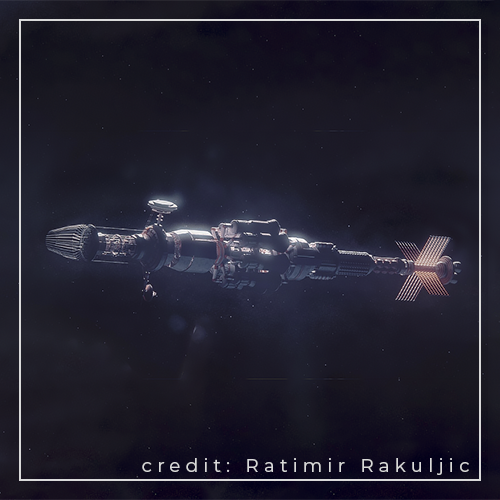
By the year 2060, human civilization on planet Earth had been ravaged by war, famine, pollution and poverty. In a final effort to give humanity a fresh start, the U.N. launched the Starship Unity. Ten thousand crew and colonists, under the leadership of Captain Garland and bearing nothing to signify their country of origin, were placed in cryogenic sleep. They departed on a decades long journey to colonize the planet Chiron in the Alpha Centauri system. No contact was ever received again from Earth after the launch.
Forty years passed without incident to ship or crew. With the Unity only days away from planetfall, a core malfunction awakened the crew prematurely. As they attempted repairs, an unknown assailant killed the ship's captain. Panic and confusion followed in the wake of this incident. Seven leaders were able to restore order but it came at the cost of the original mission; the colonists reorganized themselves into seven groups, each following one of the leaders.
Aligned now not by nationality but by ideology, each faction took control of a colony pod. The Unity, its operations neglected, broke apart in high orbit around Chiron. Colony pods, resources and supplies were scattered on the surface and humanity began constructing civilization anew in isolated communities, each one out of contact with any other colony groups which may have survived planetfall.
Hostile to its visitors, no human could survive upon Chiron unaided - the native flora was not edible, the local fauna was unrecognisable, and even the atmosphere itself would slowly but surely kill anyone unfortunate enough to not have a pressure mask. Each faction gathered its people and made the best of a difficult situation, aided by the best tools the budget-strapped mission had. Basic gene banks and nuclear reactors were stretched to their limits as the colonists did what they could with the knowledge they had of earth technology and the gear they had brought with them, establishing the first bases. Slowly but surely new societies were born, along with the first children of the planet.
Most factions spent the first decade scouting the area around where they landed, looking for usable resources to help expand their nascent home. With each expedition, explorers armed only with basic pistols (and later, laser weaponry) set out across the land, and as they surveyed and staked their claims the tendrils of each faction spread further out over the planet.
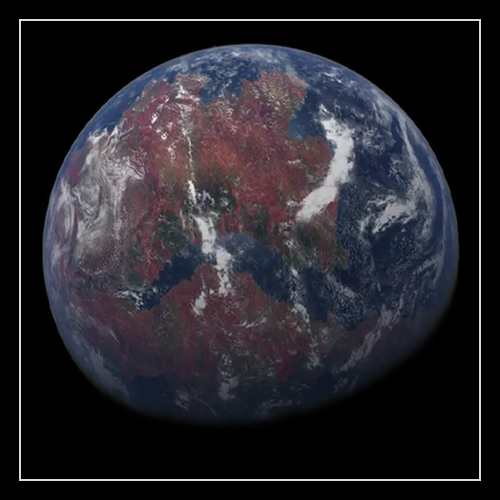
The planet rose to meet them as they travelled, and the strange red fungus that gave Chiron its colouration when viewed from space became a common sight and hazard. It seemed to be in a symbiotic relationship with almost every other entity on the planet, and many early missions paid the price for their hubris as scouts encountered boils of what came to be known as Mindworms. Each worm was only around twelve centimetres long, but they erupted from their boils in incredible numbers and were unrelenting in their onslaught.
Across Chiron, every faction experienced the same thing - a mission would head into the wastes, and then the comms would fall silent, interrupted only by final messages containing garbled screams and frantic soldiers claiming to see the impossible and the awful. Nobody ever came back from those early missions.
Even now, in the bright and shining year of 2150, scientists aren’t sure what empowers the Mindworms. Commonly accepted theories include hormonal secretions that stimulate fear and hallucinations in those afflicted, or some chemical release that poisons the mind - some fringe theorists posit that the ability is psychic in nature. Historically this has been dismissed as fantasy, but as technology progresses and the colonists become more familiar with their home, it seems more plausible every day.

Despite the many trials and horrors of Chiron, each faction has flourished in their own way. The colonists have accepted these external threats as a part of life, finding ways to survive and mitigate the impact of such strange creatures. Human civilisation upon Chiron is in its infancy, but all have achieved basic cultivation of the landscape around them, the creation of simple information networks, and the foundations of an industrial base. Much time and effort is spent researching how to engage with a small population upon this strange new world and recreate even a fraction of what was previously possible. Alternative pathways of discovery have also opened up upon this new planet, and developments in advanced social psychology and certain other fields are beginning to surpass what was possible on earth.
As society stands now, humanity has spread over promising locations upon the planet, with most factions reaching a population of around 10,000 and having established two or three bases in addition to their capital. The ever-reaching arms of each group are finally beginning to make contact with one another - whether these are extended in peace or raised to strike is another question. A new generation of planet-born are rising, and those few who are old enough to remember Earth are waiting with bated breath to see if they will mirror the mistakes of their burned, fallen ancestors.
Thanks to the longevity treatments that are widespread amongst those who can afford them, many Earthlings still live and sit in positions of power, guiding the first generation of planetborn in their labours to build this new world - and more exciting still, the second generation are beginning to turn their eyes out to the heavens, ready to inflict their own wonders upon their world.
"So won't you run and play with me here among the teeming mass of humanity? The universe has spared us this moment."
Anonymous, Datalinks